
Local Yards.
Local Soil.
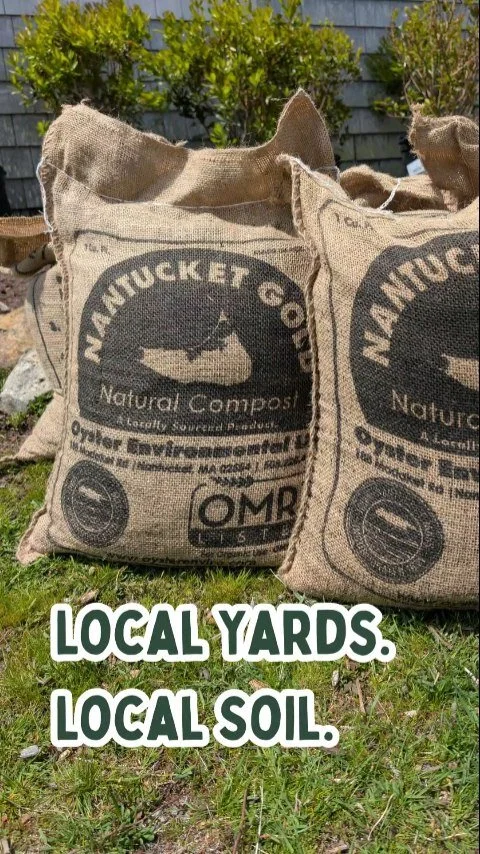
NANTUCKET GOLD™ COMPOST
Building Better Soil, One Yard at a Time.
OMRI Listed · Independently Certified & Tested · Safe for Island Waterways · Bulk & Bagged
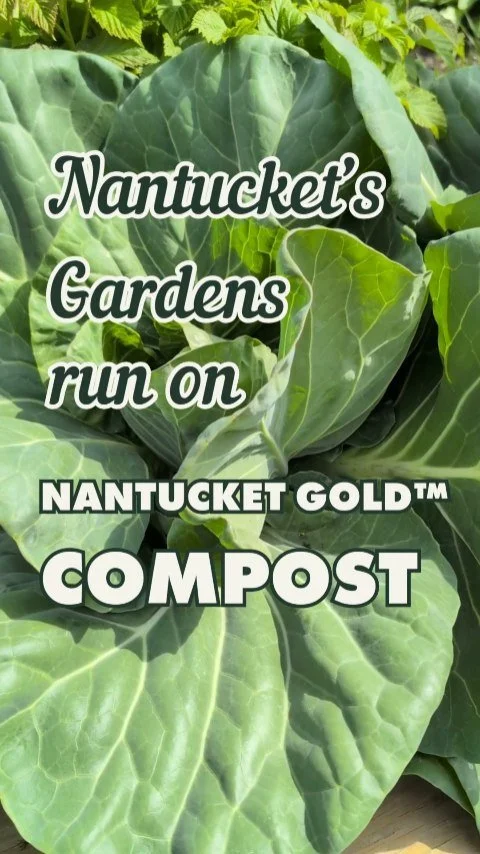
Made from 100% recycled leaf and yard trimmings. Nothing Else.
WHAT OUR CUSTOMERS SAY
WHAT OUR CUSTOMERS SAY
-
![]()
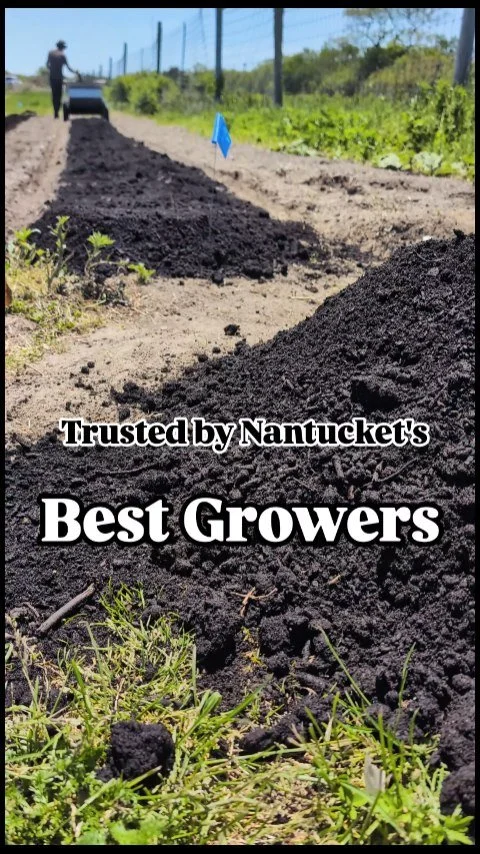
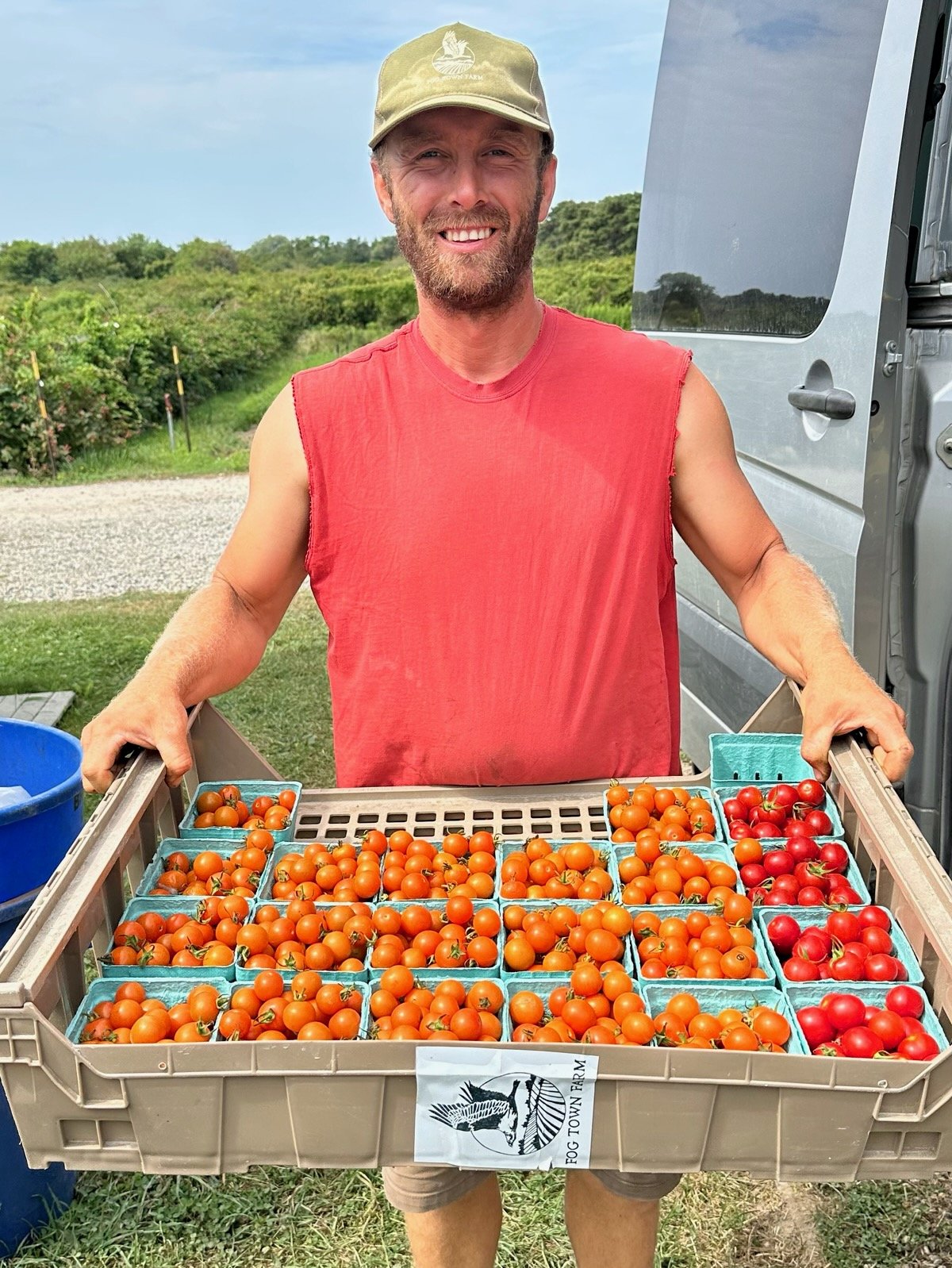
"Nantucket Gold™ Compost has been indispensable to my farm for the last seven years. It's consistent, dark, rich texture has dramatically improved my soil structure and nutrient retention, laying the foundation for exceptional harvests season after season."-Aiden Feeney, Fogtown Farm
-
![A woman standing next to a vintage red Chevrolet pickup truck with an outdoor field background, with flowers in the truck bed and a Massachusetts license plate reading 'FLEUR'.]()
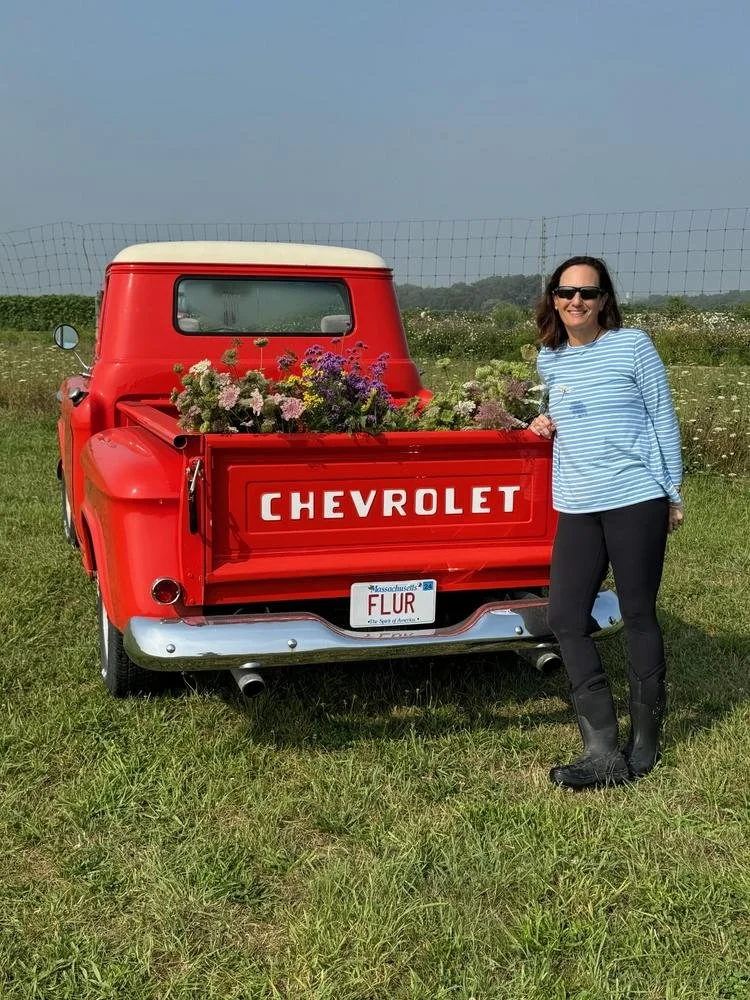
“As a flower farmer, I regularly perform soil tests. Oyster Environmental compost has helped me create a safe, healthy environment on my farm. My seedlings thrive in it and I love knowing that it is island made, employing a regenerative, closed loop system.”- Melinda Puljic FLEUR NANTUCKET, LLC
-
![A farmer's market stall displaying fresh vegetables such as orange peppers, radishes, garlic, tomatoes, carrots, and leafy greens arranged in baskets and crates outside on a table with a beige tablecloth.]()
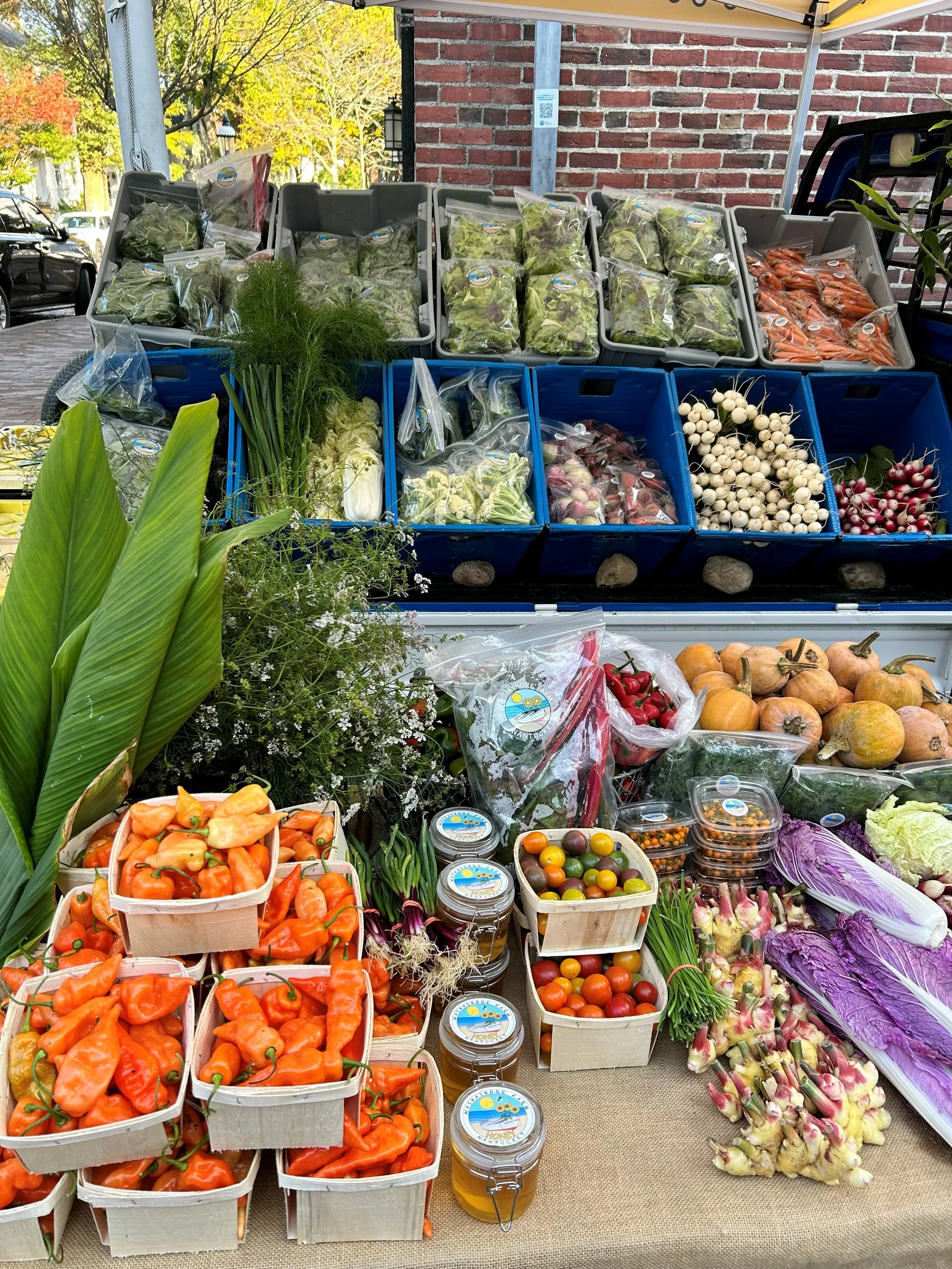
"I value its affordability, consistency, high organic matter, and OMRI Listed status for use in organic production, as well as the role it plays in reducing the island’s landscape waste stream. In all honesty, I couldn’t farm the way I do without it. Organic regenerative farming on Nantucket at any scale would be economically out of reach otherwise."- Dan Southey, Washashore Farm
-
![Rows of black pots filled with young green plants in a nursery or garden center outdoor area, with some watering equipment visible, under natural sunlight.]()
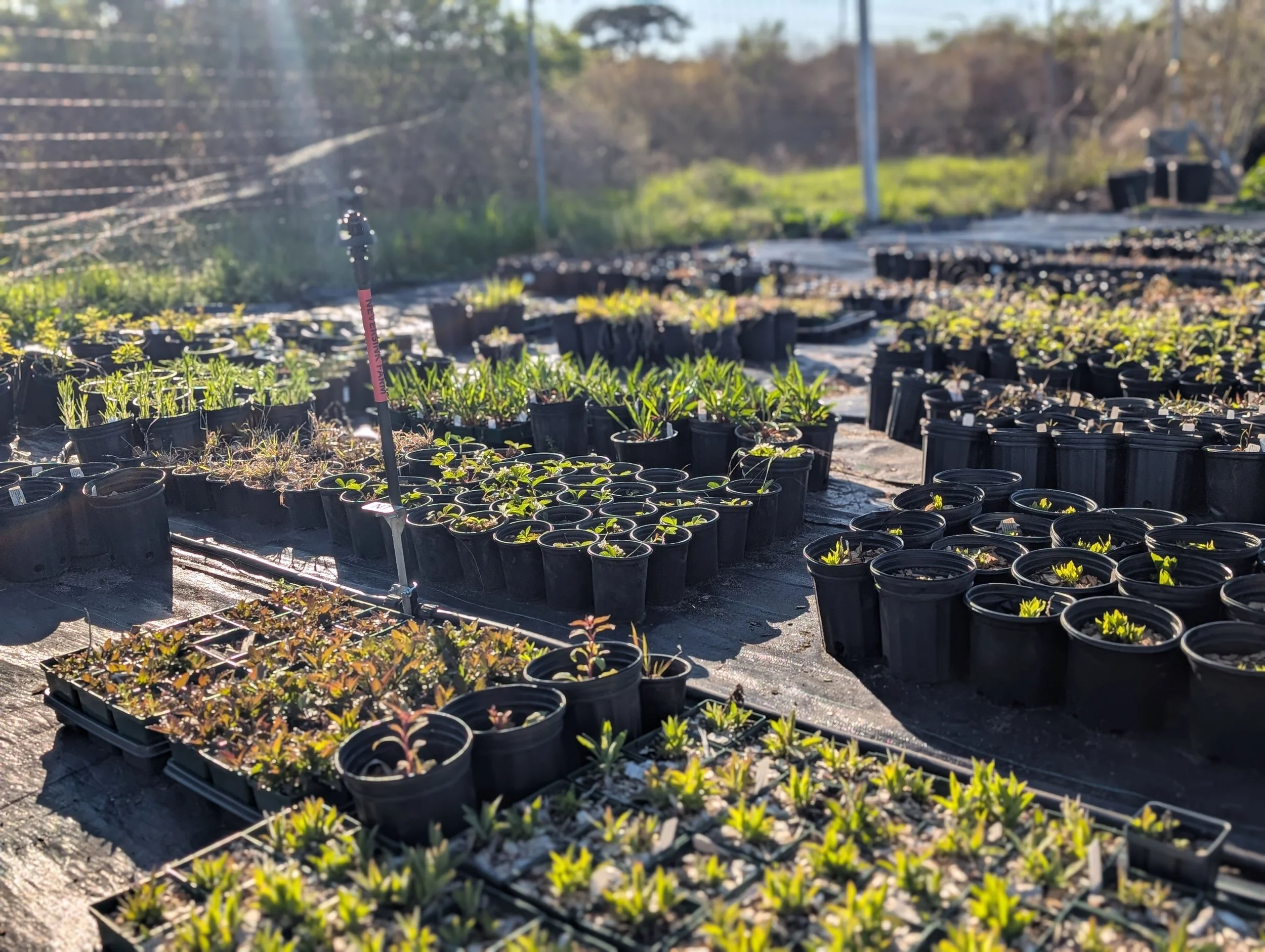
"I've been using Nantucket Gold as my base medium for making custom potting soil and my native perennials thrive in it. The high organic matter translates to improved moisture retention and nutrient uptake which is exactly what my plants need to survive long stretches in a pot. You can't beat the price either!"- Leah Mojer, In Situ Native Plants
Nantucket Gold™ Compost Standards
-
![Green soil processing machine on dirt ground with tire tracks, under clear blue sky.]()
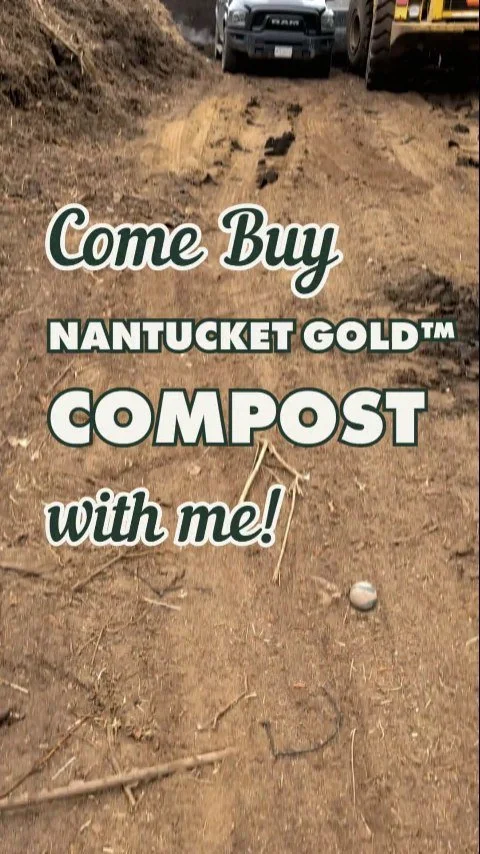
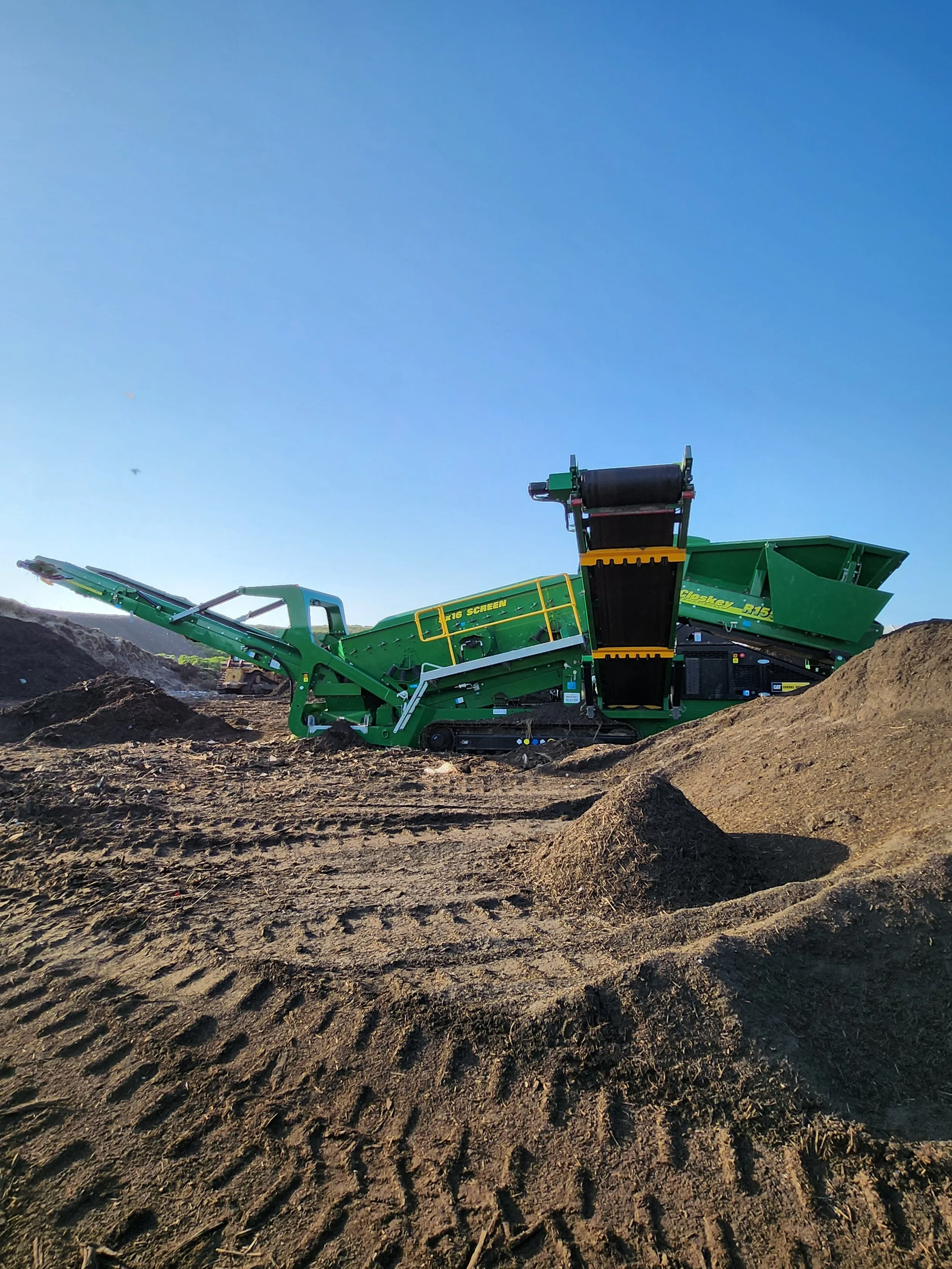
MADE ON NANTUCKET
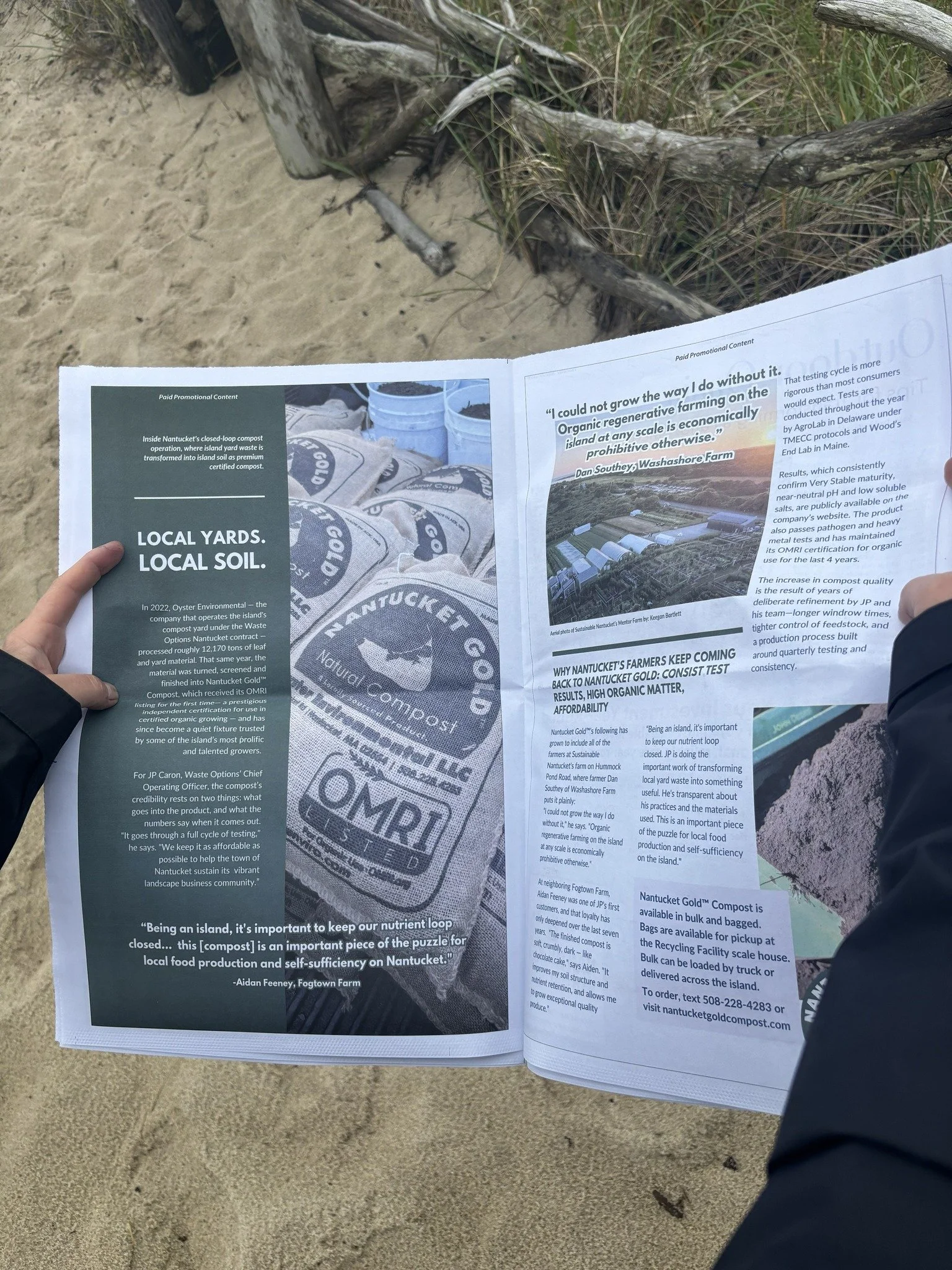
Collected, managed and certified on island solely from Nantucket’s yard waste. Nothing imported, nothing wasted.
-
![OMRI listed logo with green leaves and text indicating approval for organic use.]()
OMRI CERTIFIED
Independently reviewed and listed by OMRI, confirming this compost meets established organic standards for use in growing organic crops.
-
![Young plant seedlings sprouting in black plastic pots filled with soil, arranged in a tray.]()
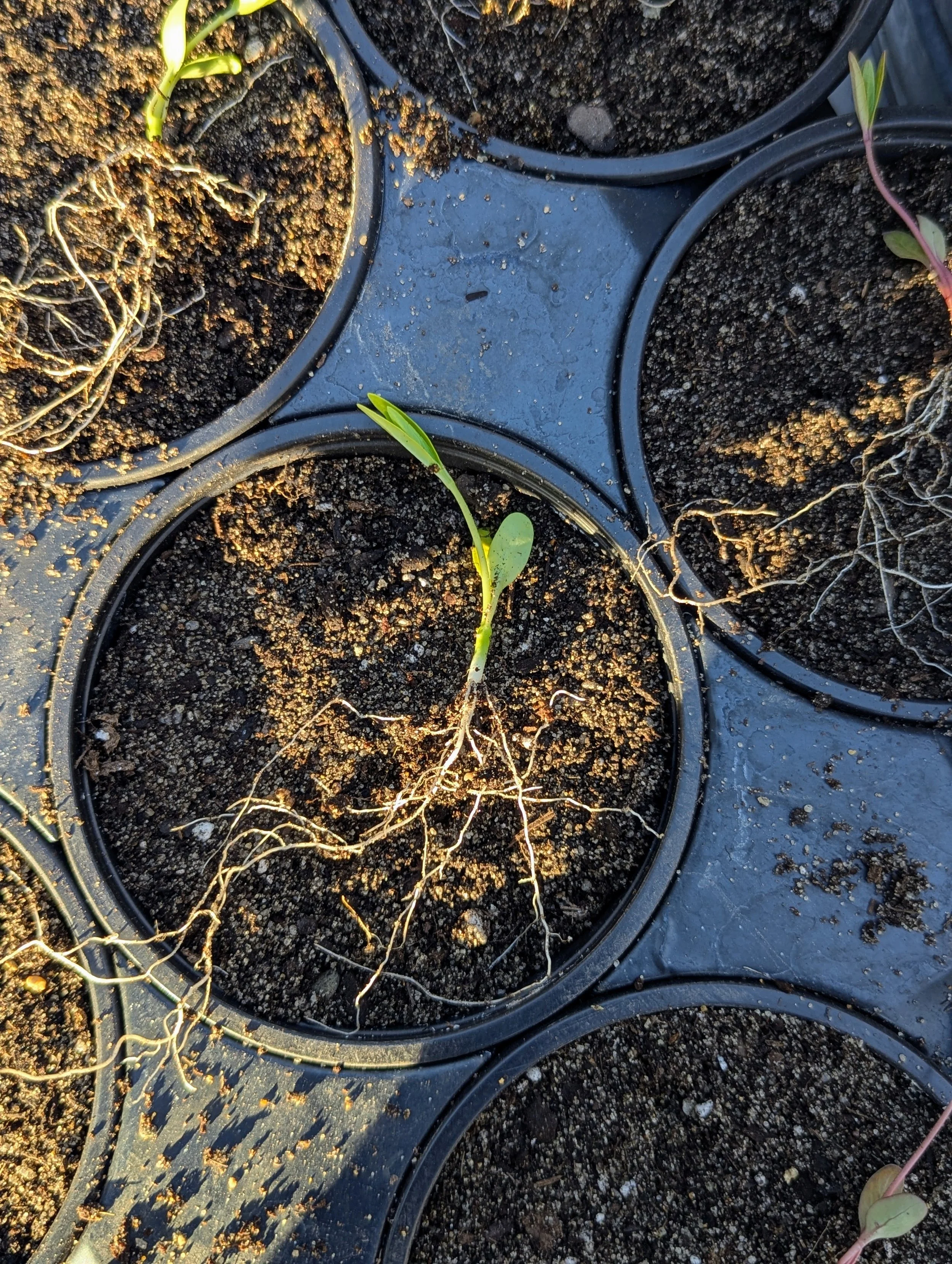
SOIL BUILDING POWERHOUSE
A soil-building amendment designed to improve sandy soils by increasing organic matter, water retention, and long-term soil health.
-
![The trunk of a vehicle filled with multiple burlap bags labeled 'NUTCKET GOLD Natural Compost' and a box of ZeroG fertilizer or soil amendment.]()
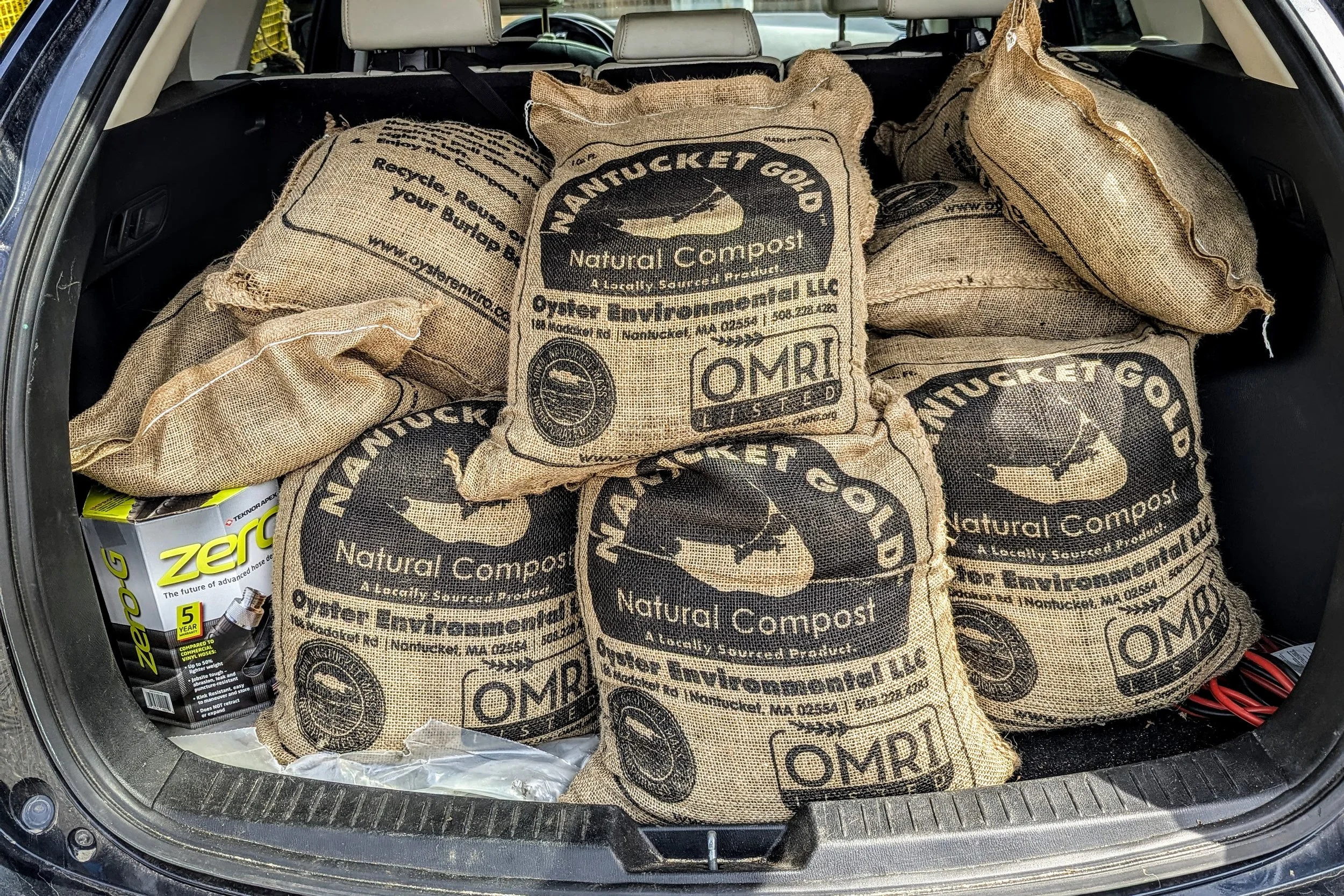
CLOSED-LOOP SYSTEM
Landscape waste is transformed into a usable resource, strengthening island soils while supporting long-term environmental stewardship.
-
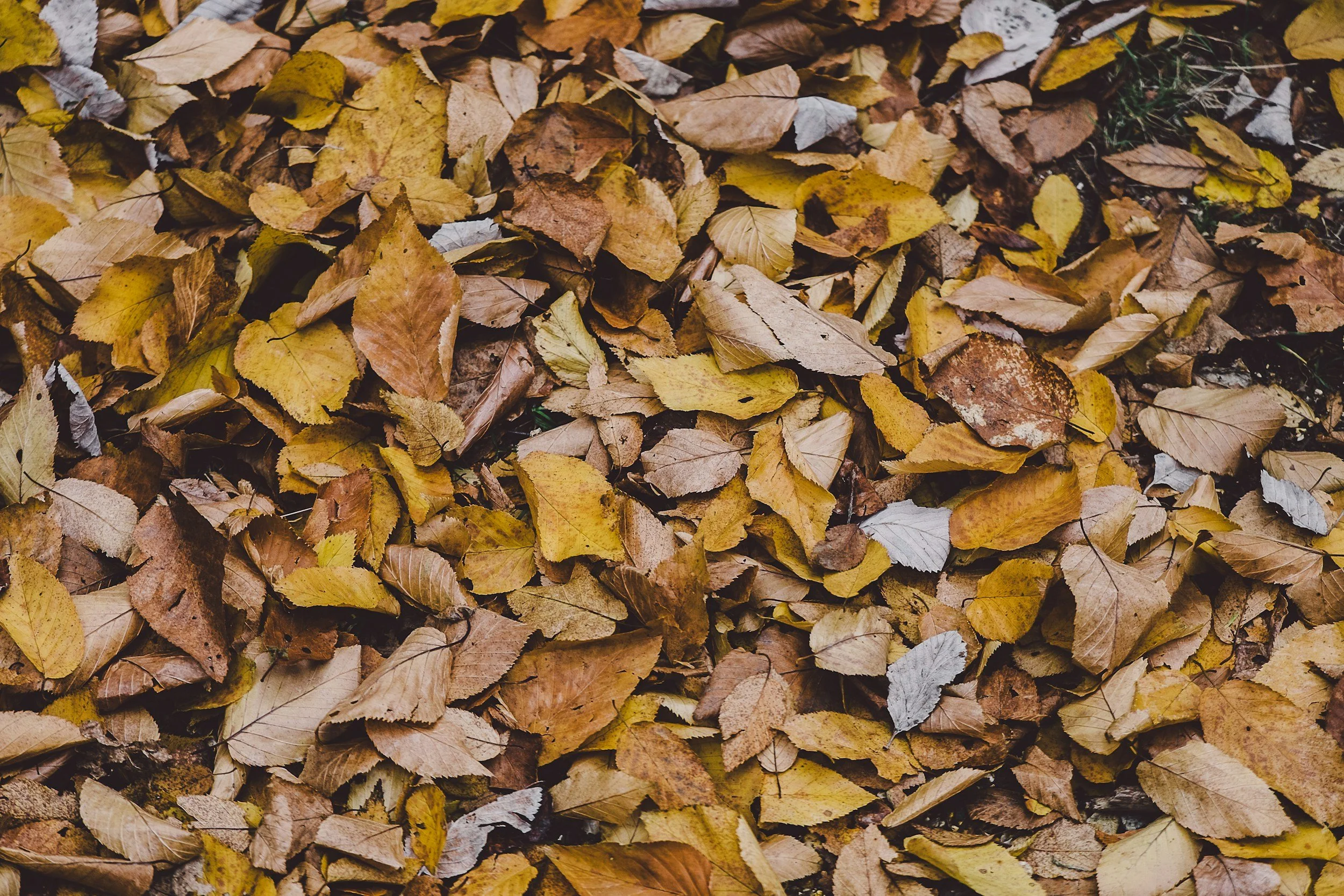
![A pile of dry autumn leaves in various shades of yellow, brown, and some gray]()
YARD WASTE ONLY
Composed of leaves, grass, and landscape debris collected on Nantucket. No food waste. No biosolids. No imports.
Tell us a little about your project and we'll send you a quote.
OUR PRODUCT
Nantucket Gold™ Compost
Nantucket Gold Compost™ Recipe Guide
Our Location
Oyster Environmental / Waste Options Nantucket
188 Madaket Road, Nantucket, MA 02554
For bag pickup, check in at the scale when you arrive. Bulk pickup requires advance notice — please contact us before your visit so we can have your order ready.
Text GOLDCOMPOST to 508-228-4283
About Oyster Environmental
Learn more about our composting process, quality standards, and the team at Oyster Environmental behind Nantucket Gold™ Compost.
Frequently Asked Questions
-
Nantucket Gold Compost is made solely from 100% source segregated Nantucket leaf and yard waste. There is absolutely no household waste, biosolids, food waste or any other inputs mixed in and the the material is handled with dedicated machinery to keep it safe from contaminants on our site.
-
Yes. Nantucket Gold™ Compost is OMRI listed and produced under controlled conditions that ensure proper decomposition and pathogen reduction. It’s safe for vegetable gardens, ornamental beds, and landscape use.
-
Nantucket Gold™ Compost is produced using modern screening equipment designed to remove glass and other contaminants. While all incoming material is inspected, occasional non-yard items can enter the system due to improper disposal. Our screening process and dedicated handling greatly reduce this risk and produce a clean, high-quality finished compost.
-
Leaf and yard material is composted and cured for 8-12 months or more before being screened and made available as finished compost.
-
All incoming material is visually inspected, and leaf and yard waste is kept separate from other materials on site. Dedicated equipment is required per our OMRI certification and used throughout the process to protect compost from contaminants.
-
Yes. Nantucket Gold™ Compost is regularly tested by three independent labs using EPA and USDA approved methods. Testing includes metals, organic compounds, and other parameters commonly used to evaluate compost and soil amendments.
-
Testing focuses on:
Metals (such as lead, arsenic, cadmium, mercury)
Organic compounds (including PAHs and other semi-volatile compounds)
Overall indicators of product quality and safety
These are standard tests used for compost, soils, and environmental materials nationwide.
-
No PFAS standard currently exists for compost at the state or federal level, and therefore MassDEP does not require PFAS testing for leaf and yard waste compost.
The primary way PFAS enter compost is through food packaging, soils treated with biosolid-based fertilizers, and biosolids themselves (treated sewage sludge). Nantucket Gold contains none of those inputs — it is made exclusively from island-collected leaf and yard waste. We do not use food scraps, sludge, or excavated soils.
We're committed to transparency and will continue to monitor the evolving regulatory landscape. If MassDEP establishes PFAS standards for compost, we will comply.
In the meantime, the island of Nantucket and its businesses should take every possible step to avoid pesticides, fertilizers, and other products known to contain PFAS. This is a standard worth striving for as a community.
-
Yes! We believe in transparency (because our compost has nothing to hide).
Summaries of testing are available at this link, and we’re always happy to explain results in plain language. -
Not by itself. Plant roots need both nutrients and oxygen to grow. On its own, compost is too dense to provide the air pockets roots need. Nantucket Gold is an essential building block of great soil, designed to be blended with soil or other materials to create the right balance of structure, drainage, and airflow.
👉 See our Compost Recipe Page for the right mix.
-
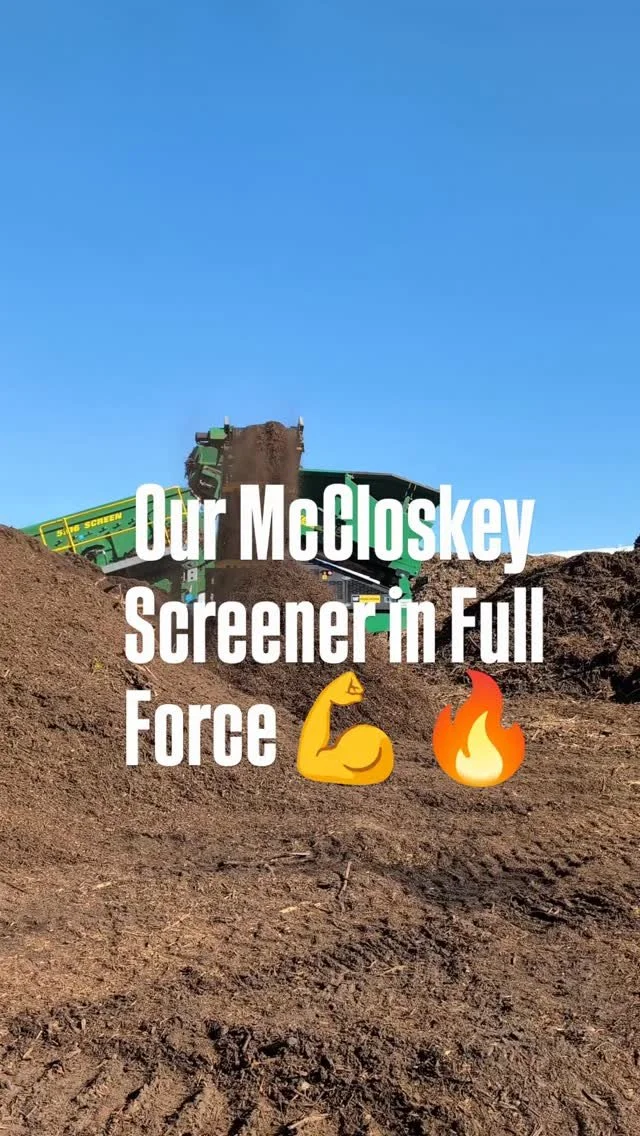
Because producing a finished, tested, certified compost requires real infrastructure. Every batch is turned a minimum of six times using heavy machinery before it's ready to screen. It then runs through a McCloskey Trommel Screener to produce the consistent, fine-textured product you're getting. After that, it's analyzed by AgroLab using TMECC protocols — the industry standard for compost testing. Results confirm Very Stable maturity, passed pathogen and heavy metal screens, near-neutral pH (7.4), and exceptionally low soluble salts (EC 0.20 dS/m). It is OMRI Listed, independently reviewed and approved for certified organic use.
That level of process — six turns, mechanical screening, third-party lab verification — has real costs in equipment, fuel, labor, and time.
Unprocessed yard waste is not compost. It's feedstock. The difference between raw material and a finished, stable soil amendment is everything that happens in between.
Follow the Dirt